 info@wildearth.travel

April, 2026 – Delhi – Agra – Panna – Bandhavgarh
One in the morning, New Delhi. A smiling driver met me as I stepped from the airport into a pall of smog so dense it felt like I was wading through smelly porridge. We walked to an elevator, where the doors parted to reveal a mangy hound sleeping in the rear. I was all set to throw my bag at it, fearing the cur might attack, starting my trip with a mild bout of rabies.
‘Don’t worry sir,’ said the driver, his head bobbing from side to side, ‘he lives there, people feed him and so he sleeps in the lift.’ Indeed, the animal cast us a polite glance and then returned to his canine dreams when no snacks were forthcoming.
The thought of visiting India is terrifying to many people (obviously those who are not Indian). It is a vast country of colours, sounds, smells, sights and experiences — the assault on the senses can be quite overwhelming at first. But once you embrace the vast cultural melange, it can be utterly captivating.
This Indian odyssey took in but a fraction of this enormous country — we drove from Delhi to Agra to see the Taj Mahal, caught a train from there to Khajuraho, from where we ventured into Panna National Park on a tiger quest and then, finally, drove to famed Bandhavgarh National Park for more tigers.
We stayed at four utterly magnificent places run by the Oberoi group. The hotel in Delhi was predictably, beautifully appointed and spacious, but it was the other three that really blew my mind.
The Amarvilas in Agra sported views of the Taj Mahal over the trees and noise of the city. My highlight was the Amarvilas pigeons, however. Tom, Dick and Shaheen were involved in a love triangle that played out on my balcony and in my room — on the standard lamp, the wardrobe door and even the pillow…mercifully they left no waste. Enchanting to me, disturbing to others no doubt.
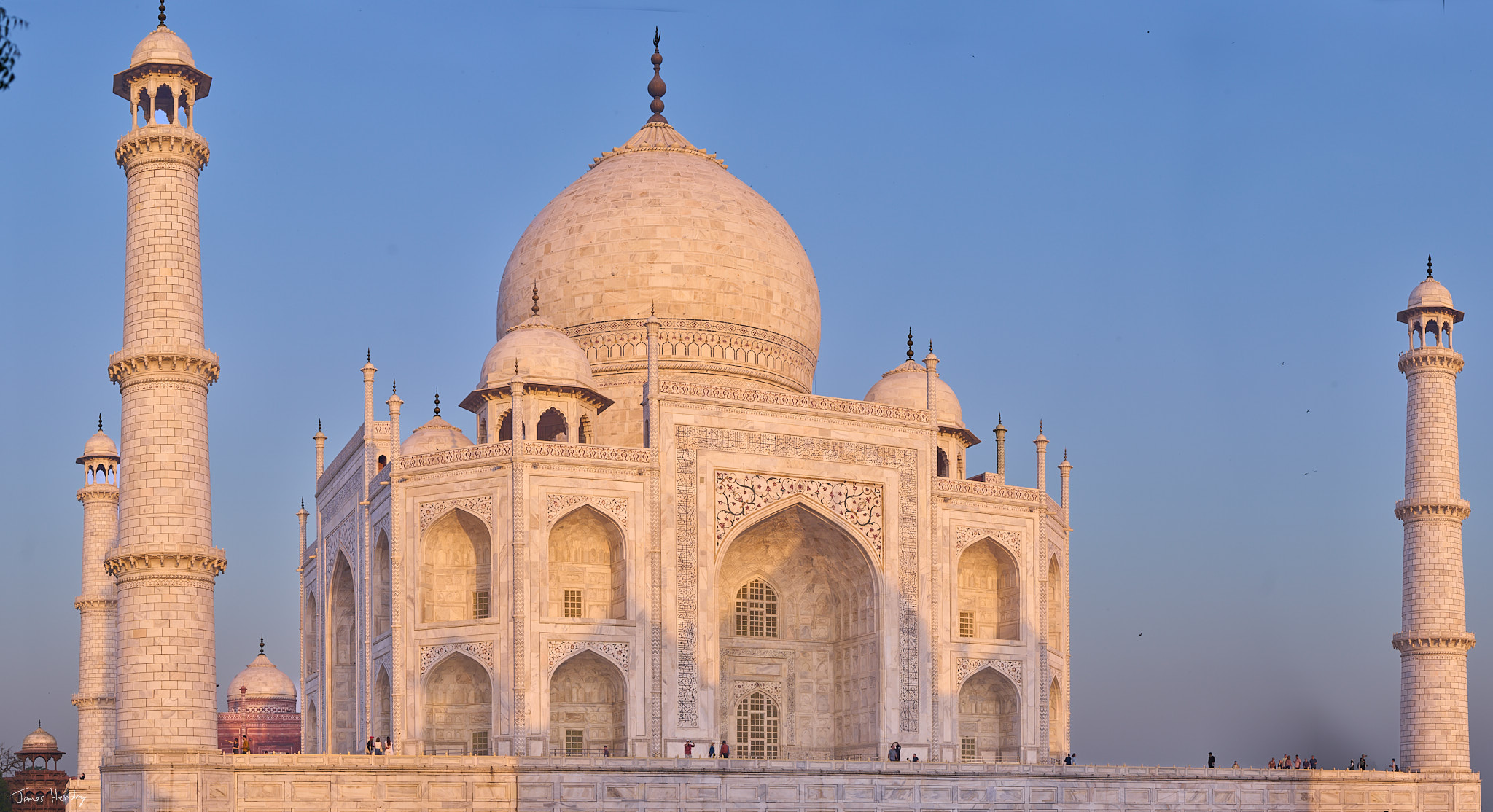
We visited this monument to leaders with too much money, time and slaves at dawn with Aakash, genius guide of Agra. We were first into the Taj complex and Aakash managed to engineer us photos of the intricate marble mausoleum with not another soul in sight, the facade glowing pink in the gathering dawn. We were first into the inner sanctum where Aakash’s baritone reverberated like the ghosts of the long-dead emperor and his longer-dead wife — she popped her clogs, unsurprisingly, giving birth to his 14th child…
Bathrooms should never be the focus of a trip, but I must make mention of the Oberoi’s ablutions, which offered a brand new experience for me: the smart commode. Now, I like a bit of lux living as much as the next chap, but a sentient thunderbox is going too far…I was deeply intimidated every time I entered the bathroom. The robot loo opened of its own accord, an unfathomable panel of cleaning options urging me to apply all manner of powerful waterjets to my nether regions. It took me three days to summon the courage to use it — all the while feeling watched — nay judged — by the beeping AI throne.
A charming (well, sort of, depending on your ability to be open-minded) train trip took us to the Rajgarh Palace, perched on a hill overlooking Panna National Park. The place has recently been completed and was, once, literally a palace fortress. The Oberoi people have left a lot of the old, vine-covered ruins in place which, combined with the haunting call of the peacocks, left me feeling as though I was living in a place touched by the ghosts of 350-year-old Bundelkhand history. I half expected King Louis to leap up and sing ‘I wanna be like you’ on the mossy ruins.
The Oberoi Vindhyavilas Wildlife Resort offered yet another completely different, but equally compelling, place of tranquil gardens and cool, spacious bungalows. It was also possessed of a mind- and face-eviscerating cuisine of staggering complexity. Importantly for western travellers of tender gastric persuasion, all locations catered to any palate. If you wanted to melt your brain and scour your alimentary canal with violent Indian spices or enjoy the blandest of western sandwiches, no request was too much trouble and everything was delicious.
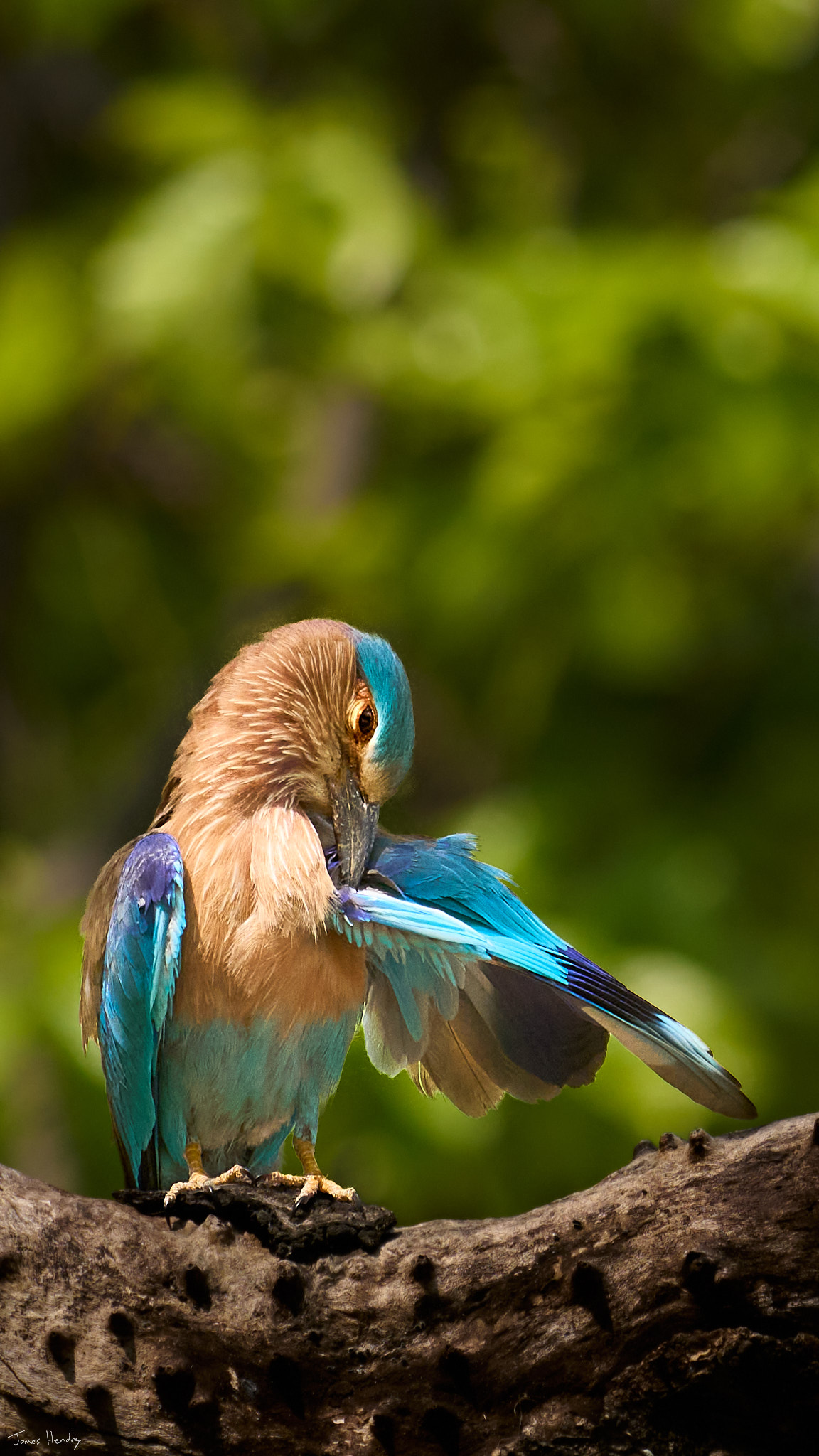
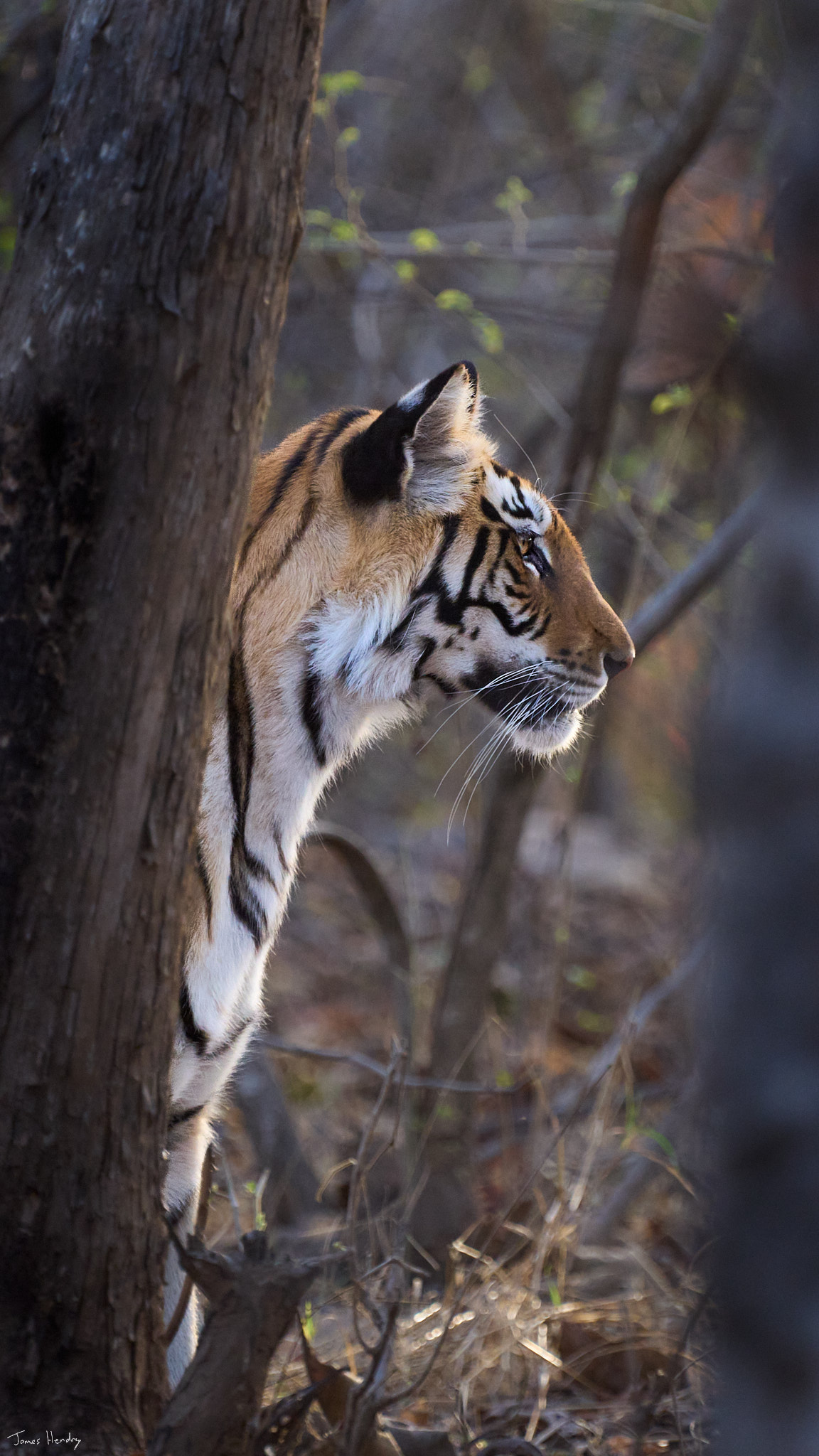
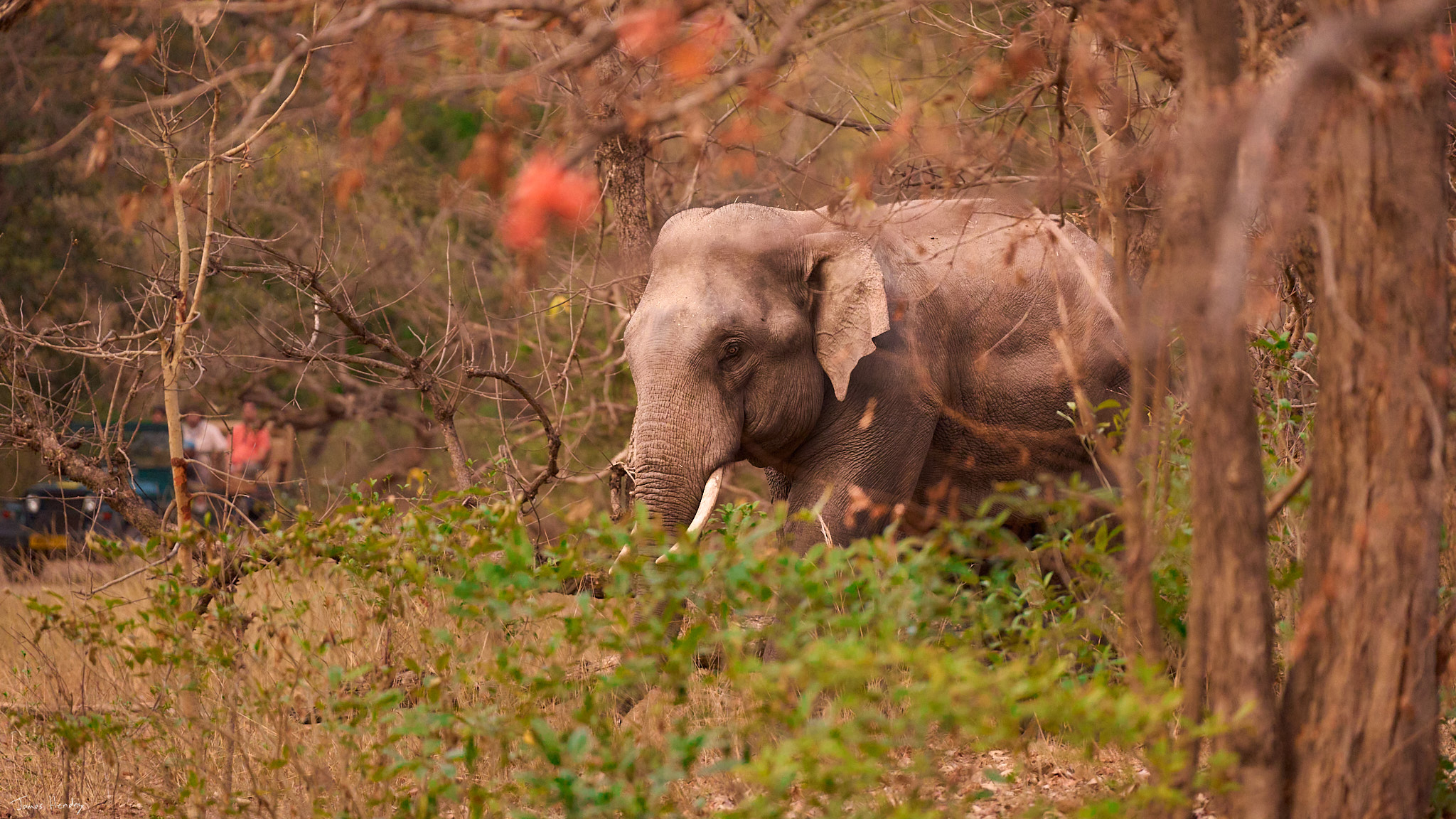
But, of course, the main purpose of the journey was not to sample the hotels — it was to see tigers. And those great cats we saw in profusion. Panna gave us a tigress roaring at her two sub-adult cubs before playing with them on the road, a mother and three five-month-olds, and another tigress also looking for her cubs. In Bandhavgarh we saw a massive male patrolling his rocky mountainside and a mating pair doing their…thing…in the cool shade of a banyan tree. Then there were spotted deer, sambar deer, barking deer, Indian gaur, grey langur monkeys, thieving rhesus macaques and even wild boar. More birds than you can shake a stick at flitted through the trees, singing, chanting and squawking. The jungles were full of unfamiliar, delightful sounds, smells and sights.
All told, however, an Indian odyssey should not be compared to an African safari — for while the principle is similar there is only one focus…tiger, tiger, tiger. The lodges are also not in the reserves and no matter how much you pay for the experience, everyone starts at the park gate at the same time — there is nothing exclusive about the safari, despite the majesty of the accommodations. This is not a safari, it is an Indian tiger experience and, viewed through that lens, it is a wonderful adventure. The drive between the lodges and the reserves takes you through farmland and villages — full of colour, culture, charm and the realities of poor, rural life in the world’s most populous country.
Once in the parks, however, the haunting call of the peacock, the hoot of the langur monkey and the alarm shriek of the spotted deer transport you to the gorgeously exotic world of the famed Bengal tiger.