Whenever I travel to a place, I like to wake at dawn and go for a run. Obviously, given my regular safari destinations, this isn't always possible. Trotting out of Governors' Camp into the head-high grass of the Mara in the half-light would likely result in my becoming the Marsh Pride's stringy breakfast. Some of the cities we must use as waypoints on our safaris boast residents far more dangerous than the Marsh Pride, so then the treadmill (or a lie-in) must suffice.
I wasn't sure what to expect, rising as the black night turned to pinkening dawn at Mantadia Lodge in the Andasibe region of Madagascar. There were a few strange looks from the bleary-eyed staff as I trotted off down the road to Andasibe Village.
The villagers themselves, just emerging from their timber-constructed homes onto the rough, hand-hewn, cobbled streets, hardly paid me any mind. Chickens pecked away at invisible breakfasts, the odd cow lowed and, at one spot, a bullock was being trussed up - I suspect to make his unwilling way into the lodge's 'zebu stroganoff' served that evening. Sleepy-eyed kids began their games with sticks, old tyres, and other home-made toys. Women carried water to their homes past stalls with various wares - from cheap Chinese knockoffs to fresh mini-baguettes and exquisite fresh produce.
But I'm jumping the gun…the trip started in Antananarivo (Tana), capital of Madagascar.
Death road to Andasibe
Two days prior to my village trot, we drove from Tana to Andasibe. National Road Number 2 - a grand name for the crime against humanity that is the artery linking Tana to the Port of Toamasina - saw us cover 125km in around five hours. Mercifully, our guide Misa was a font of fascinating Malagasy knowledge, to the extent that we barely noticed the whiplash and near-death head-ons.
Apart from the chiropractic savagery meted out on our skeletons, the highlight of the trip down was a close encounter with a family of common brown lemurs foraging on the side of the road. These are the most confiding of the lemur species and we enjoyed a marvellous time with them as they grunted at us like pigs, feeding on fruits and performing arboreal acrobatics.
Mantadia Lodge, the gorgeous place into which we finally fell, is a picturesque auberge (had to sneak one French word in) set high in the hills once covered in primary forest. Misty rain bathed the hilltop and it wasn't long before we were in a community reserve looking for delights in the dark - mouse lemurs, chameleons and the odd orchid in early bloom.
We spent three nights in Andasibe and each day we sallied into the forests (primary and secondary) of the national park or the community reserves to look for lemurs, of which there are more than 100 species on the island. Unlike traditional safaris, there are no vehicle-based activities.
Rather, the days are spent walking slowly through the forests, craning upwards to look for lemurs, birds and floral wonders. The lemurs are, undoubtedly, the main attraction. They are a remarkable group of primates that occur nowhere else on the planet, separated from their last common ancestor with anything on the African mainland 60–70 million years ago. Andasibe is home to some of the more charismatic of them.
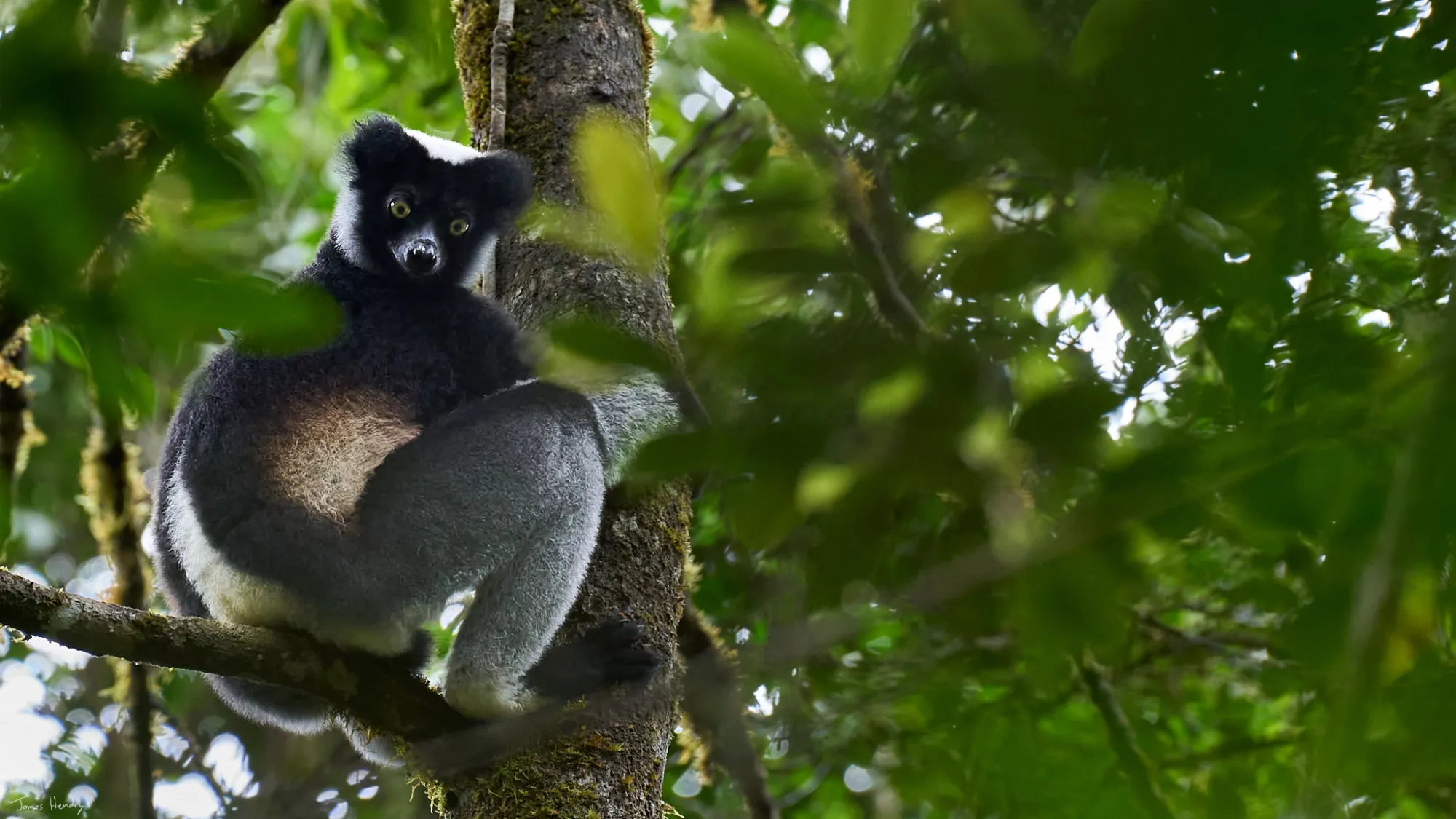
The Indri was our primary goal and we were extremely lucky to both hear and see this bizarre creature at close quarters. The first couple were 30m up in the air, silent and shy. The second group, however, sat just a few feet above us and then began to sing to each other with their haunting yet humorous whale-like call.
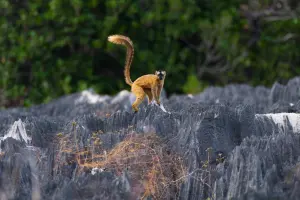
The other highlight was the diademed sifaka with its gold-streaked pelage and accommodating nature. Many of the species are nocturnal, so night walks with headlights are essential to net some of the smaller lemurs. In Andasibe we had Goodman's mouse lemur and eastern woolly lemur in the dark; indri, diademed sifaka, red-bellied lemur, common brown lemur and black-and-white ruffed lemur in the day. There were also lots of chameleons, from the enormous Parson's variety to the tiny big-nosed version.
A plane and boat to Masoala
It must be said that we picked an excellent time of year to visit the eastern parts of Madagascar - some regions, like the one we were about to experience, receive up to 4,000mm of rain a year, that's around 13 feet. July is the driest month, which is to say it only rains two or three times a week.
The trip from Tana to the Masoala Peninsula in the north-east of Madagascar was altogether far more pleasurable physically than the drive to Andasibe. I say physically, because although the flight was smooth and easy, it is sad to see how much of the island outside of the protected areas has been altered beyond redemption by humanity. Almost all land has been cleared of primary forest for agriculture and charcoal production. This is not a judgement on the Malagasy people — this is a poor country with an inept government and the people need to eat. It's hardly as though Europe, Asia and most of North America haven't experienced the same environmental destruction at the hands of our species - it's just that we weren't concerned enough about it at the time to take any notice.
After the flight, we voyaged across Antongil Bay by speedboat to Masoala Forest Lodge. The smoothness of the crossing made my consumption of 34 Dramamine tablets unnecessary and in less than an hour, our bare feet were in the sand. You cannot drive to Masoala - there are no roads. You can hike, but that takes two to four days depending on fitness. The French colonists built a small, now defunct, railway to extract timber to the coast, but that is the extent of the infrastructure.
The camp itself was utterly charming - timber-constructed, understated, comfortable and homely. It's set on a private reserve of secondary forest well-occupied by lemurs, of which we saw mouse, Masoala woolly, eastern grey bamboo, Masoala sportive and white-fronted brown. The highlight, however, was a walk into the primary forests of Masoala National Park where, after some effort, we enjoyed a fantastic sighting of a red-ruffed lemur.
The four nights at Masoala saw us strolling the local forests, canoeing up gentle mangrove-lined rivers, snorkelling, birding, swimming in the ocean, barbecuing on the beach, eating a great deal of fresh-caught fish and sampling many home-made infused rums. We also visited the local village where life appeared rather idyllic - simple subsistence fishing, rice and fruit farming. Undoubtedly that impression is rose-tinted to absurdity by someone who has never had to live the 'simple life'. It would take an extraordinary effort for a child from the village to become a leading quantum physicist or a doctor, but Masoala Forest Lodge is doing its bit through an early learning centre to make sure that any budding Mozarts or Hawkings have the opportunity to fulfil their dreams.
Goodbye to the 8th continent
When a pall of sadness hangs over the departure, it means the trip has been a good one — so it was as we departed for home. New memories, stories and, of course, those wonderful lemurs.
Perhaps what surprised me most was the gentleness of it all — apart from the vicious car trip to Andasibe. There is one mildly venomous snake on the entire island, one semi-nasty-very-hard-to-find spider, and in the wetter parts, almost no angry vegetation. The people we encountered were universally friendly and I was struck by the mildly sarcastic sense of humour - right up my alley.