After the widespread flooding that swept across much of Southern Africa in early 2026, drought may seem an unlikely concern. Yet climate scientists warn that the region cannot afford to look only at the last extreme event. A developing El Niño pattern, expected to influence rainfall and temperature through late 2026 and into 2027, has raised fresh concern about prolonged dry spells, heatwaves and pressure on water-dependent ecosystems.

For wildlife managers and researchers, the question is not only how drought affects the animals that graze, browse, and drink at shrinking water sources. It is also how those changes ripple upward through the food chain to the carnivores that depend on them.
For decades, the prevailing assumption was that drought could favour large predators. When herbivores weaken or die during dry years, lions, leopards, and other carnivores may find prey easier to catch and carcasses more readily available. In simple terms, less rain could mean more food for predators.
But recent research from the Sabi Sands Game Reserve suggests that the reality is more complicated. During the severe 2014–2016 drought that affected much of Southern Africa, leopards did increase their daily food intake. They also shifted their hunting towards species such as bushbuck, which rely heavily on thick vegetation for cover, rather than impala.

That apparent benefit came at a cost. The same research found that leopard reproductive success declined significantly during the drought. With vegetation thinned by dry conditions, mothers had fewer secure denning sites, and cubs were more exposed to rival predators, particularly spotted hyaenas but also lions. The loss of cover may also have increased encounters between leopards and larger competitors, particularly when mothers were leading cubs to kills.
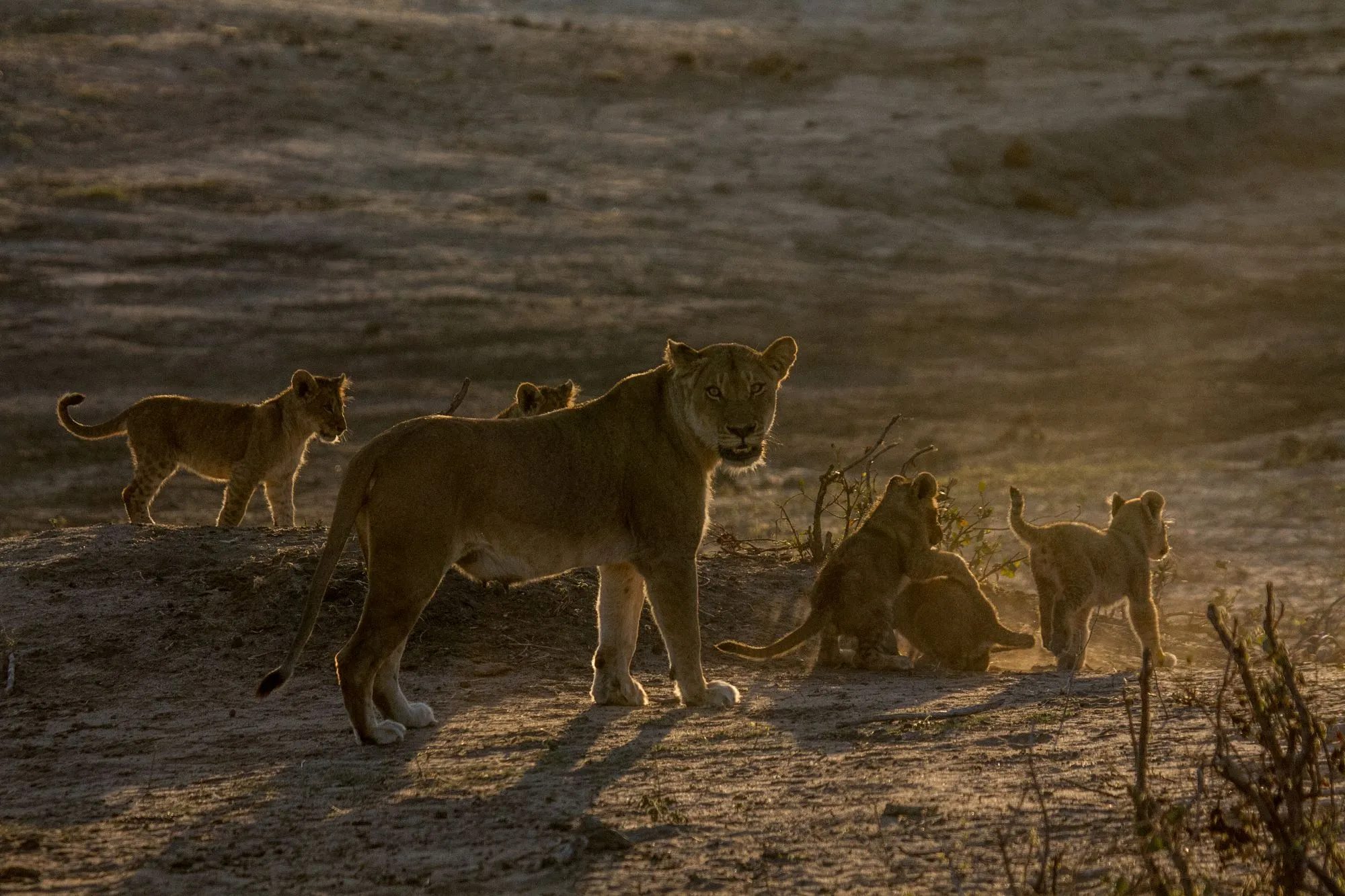
Lions responded differently. During the drought, they killed more large, water-dependent animals such as buffalo, which are particularly vulnerable when grazing deteriorates and water becomes scarce. Lion cub survival appeared to improve, likely because prey was easier to obtain and competition for food was reduced. However, a mange outbreak during the same period increased mortality and offset some of those gains.
The findings challenge the idea that drought is automatically good news for predators. Instead, drought reshapes the relationships between prey, habitat, and competing carnivores. For dominant predators such as lions, dry years may offer short-term feeding advantages, but disease and other pressures can quickly erode those benefits. For more subordinate predators such as leopards, the dangers of increased competition and cub predation may outweigh the gains from easier hunting.

As droughts become more frequent and severe, conservation planning will need to account for these hidden pressures. Protecting predators will not only mean protecting prey. It will also mean maintaining habitat complexity, safeguarding denning areas, monitoring disease and understanding how carnivores share space when food, water and cover are under stress.
There is, however, reason for optimism. Well-managed ecotourism can help fund anti-poaching work, habitat restoration, and long-term monitoring. Continued research can reveal which species and landscapes are most vulnerable before crises unfold. And the expansion and connection of conservation areas can give predators the space they need to move, breed, and survive through harsher dry seasons. In a hotter, drier future, these tools offer a practical and hopeful path towards reducing the impacts of drought on Southern Africa’s carnivores.

References:
https://wmo.int/news/media-centre/wmo-prepare-el-nino
Balme, N., Woodgate, Z., Hunter, L., & Balme, G. (2026). A struggle to survive: Guild hierarchy predicts drought benefit among large carnivores. Journal of Animal Ecology, 95(5), 734-746.
Ferreira, S. M., & Viljoen, P. (2022). African large carnivore population changes in response to a drought. African Journal of Wildlife Research, 52(1), 1-11.