 info@wildearth.travel


There is a quietness that settles over you as you arrive in Africa. Not silence exactly, but a slower kind of sound, wind through mopane leaves, far-off birdcalls, the crunch of gravel underfoot. A WildEarth safari does not begin with fanfare. It begins with attention.


Privately Guided by Familiar WildEarth Faces
This is not just any guided safari. It’s a journey shared with someone you already know.
For many travellers, WildEarth guides have become part of daily life. You’ve watched them on SafariLIVE, tracking your favourite leopards or pausing to admire a sunrise or set.
Now, you meet them in person – not on a screen, but beside you in the bush.
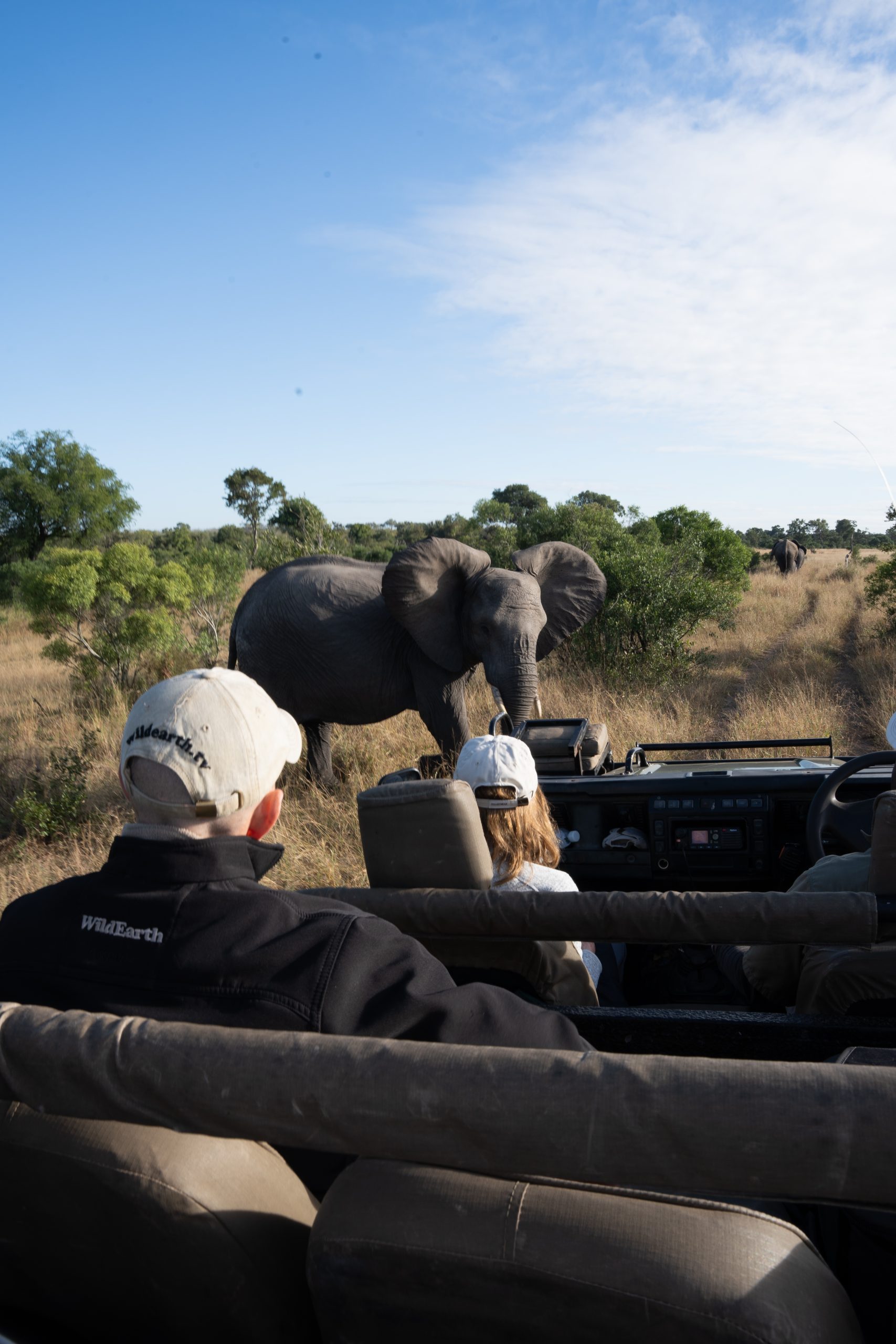
Every WildEarth Travel safari is privately guided by one of these expert hosts. Alongside them, your vehicle is supported by a local tracker (seated at the front, reading signs of the bush) and a lodge guide who knows the land and the wildlife around. It’s a three-person team, designed so your WildEarth guide can focus entirely on your experience.
Whether you are returning to the wild or seeing it for the first time, it helps to be in the company of someone who already feels familiar.
Flying into the Bush: Federal Air
From Johannesburg, most guests fly into the bush with Federal Air. These small, scheduled flights avoid long road transfers and bring you directly to remote airstrips near your camp. The journey is calm, with panoramic windows and little between you and the horizon. As you step onto the airstrip, the experience has already begun.
What to Pack and Wear
Being well prepared allows you to settle into the pace of safari. Clothing should be neutral in colour, beige, green, and brown work best, and comfortable enough for cool mornings and warm afternoons
Essentials:
- Long-sleeved shirts and trousers (for sun and insect protection)
- A fleece or jacket for early drives
- A wide-brimmed hat and good sunglasses
- Comfortable walking shoes
- Binoculars (if possible)
- Swimwear for some camps
Laundry is often available, so packing can be simple and light.
A Day on Safari
05:00 – 06:00 | Wake-Up & Coffee
A morning wake up call starts the day. With coffee or tea in hand, you watch the bush begin to stir.
06:30 – 09:30 | Morning Drive or Walk
Early drives offer the clearest animal activity. You might track lions on the move, find hyenas returning to den, or pause quietly beside a waterhole. Walking safaris, where available, explore smaller signs: tracks, feathers, scent markings, and medicinal plants.
10:00 – 12:00 | Brunch & Rest
You return to camp to share a warm meal, then rest in the shade or by the pool. Many guests nap, write, or sit quietly watching nyala or vervet monkeys drift past.
13:00 – 15:00 | Optional Time
Some days offer short walks, photographic editing sessions, or informal talks. Others offer uninterrupted calm. Your guide is nearby.
15:30 – 19:00 | Afternoon Drive
The light shifts and animals return to movement. You might follow elephants at a distance or sit with a leopard resting in the fork of a marula tree. As the sun dips, your guide selects a quiet clearing for sundowners.
19:30 onwards | Dinner & Fireside Conversations
Evenings are unhurried. Food is served beneath stars or lanterns. Your guide may share stories or answer questions, or simply allow the night to speak for itself.
Additional Essentials
Electricity and Charging:
Most camps use solar power or generators. Charging points are available. Bring a Type M adaptor.
Connectivity:
Most camps offer Wi-Fi in communal areas. Mobile signal is rare.
Health & Safety:
We recommend checking in with a travel clinic at least six weeks before travel. Depending on destination, yellow fever certification and malaria prophylaxis may be advised. Camps are well equipped with emergency support and radio contact.
Documents & Insurance:
Ensure your passport is valid for at least six months beyond your return. Visas may be required for certain countries. Comprehensive travel insurance is essential.
Tipping Guidelines:
Tipping is optional, discreet, and appreciated. We provide a guide to fair and regionally appropriate tipping amounts for guides and staff.
Conservation at the Core:
Your journey supports local conservation efforts, ethical lodges, and community-led initiatives. WildEarth operates with deep respect for land, wildlife, and people. The experience is designed to be lasting and low-impact.